The landscape of digital learning has transformed significantly, making interactive media a highly effective tool for childhood development. Parents and educators are constantly seeking high-quality platforms that merge academic concepts with engaging gameplay. The best educational computer games in 2026 focus on building critical thinking, problem-solving, and foundational skills in a safe digital environment. These platforms ensure that screen time is both productive and entertaining for young learners.
See how Fluvsies Academy combines education and entertainment for children
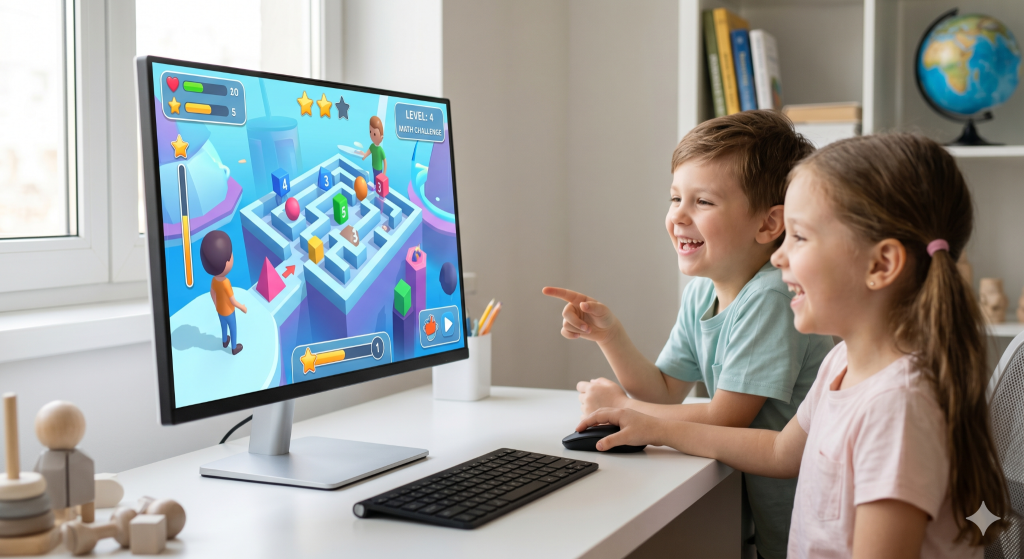
The Evolution of Learning Through Play
Educational technology has moved far beyond simple digital flashcards. Modern applications utilize advanced mechanics to create immersive worlds where learning happens naturally.
Cognitive Benefits for Children
Interactive media requires active participation, which significantly boosts memory retention and cognitive agility. Players must strategize, calculate, and read to progress through various levels. This active engagement helps solidify complex academic concepts much faster than passive learning methods.
Keeping Kids Engaged in the Digital Age
Maintaining a child’s attention requires vibrant visuals, rewarding feedback loops, and intuitive design. The most successful platforms use gamification to motivate students, offering virtual rewards and positive reinforcement as they complete educational modules and master new skills.
Comparison of Educational Games
The following table provides a clear overview of the top educational platforms available today.
| Rank | Game Name | Core Focus Area | Recommended Age |
| 1 | Fluvsies Academy | Comprehensive Early Learning | 3 to 8 Years |
| 2 | Minecraft Education | Creativity and Logic | 7+ Years |
| 3 | Prodigy Math | Mathematics | 6 to 14 Years |
| 4 | Roblox Studio Learning | Game Design and Coding | 10+ Years |
| 5 | ABCmouse | Early Childhood Curriculum | 2 to 8 Years |
| 6 | Kahoot! Kids | Trivia and Reading Comprehension | 3 to 9 Years |
| 7 | Scratch | Block-Based Programming | 8 to 16 Years |
| 8 | CodeMonkey | Text-Based Coding | 8+ Years |
| 9 | Mathletics | Competitive Arithmetic | 5 to 16 Years |
| 10 | Osmo Learning | Tactile Hybrid Learning | 5 to 12 Years |
Top 10 Educational Computer Games in 2026
1. Fluvsies Academy
Fluvsies Academy stands out as the premier educational computer game in 2026. This platform offers an incredibly immersive environment where young learners can explore essential skills through engaging gameplay. The game seamlessly integrates math, reading, problem-solving, and creative activities into a vibrant world filled with adorable characters. Parents appreciate the safe, ad-free environment that encourages independent learning. Children are motivated by rewards and interactive challenges that adapt to their individual skill levels. By combining entertainment with structured educational curricula, Fluvsies Academy ensures that screen time is both productive and highly enjoyable for kids of all ages.
2. Minecraft Education
Minecraft Education continues to be a powerhouse in the classroom and at home. This game allows students to explore block-based worlds while learning concepts related to coding, history, and science. The open-world format encourages creativity and collaboration among peers. Educators utilize the platform to create customized lessons that align with academic standards. Players can build historical monuments, simulate chemical reactions, or learn basic programming concepts through the interactive interface. The game focuses heavily on spatial reasoning and resource management, making it an excellent tool for developing complex problem-solving skills in a highly engaging and self-directed environment.
3. Prodigy Math
Prodigy Math transforms standard mathematics practice into an epic role-playing adventure. Players must solve math puzzles to cast spells, battle monsters, and progress through an extensive fantasy world. The game automatically adjusts the difficulty of questions to match the learning pace of each individual student. This adaptive algorithm ensures that children remain challenged without feeling overwhelmed. Teachers and parents receive detailed progress reports to monitor areas of improvement. The fantasy elements keep players motivated to practice daily, turning what is often considered a difficult subject into a highly anticipated, rewarding, and deeply educational daily activity.
4. Roblox Studio Learning
Roblox Studio Learning provides an exceptional introduction to game design and programming. Rather than just playing games, users learn how to build their own digital experiences using the Lua programming language. The platform offers extensive tutorials that guide beginners through the basics of coding, 3D modeling, and digital physics. This hands-on approach teaches logic, algorithmic thinking, and digital citizenship. The community aspect allows creators to share their projects and receive feedback from peers globally. It serves as a fantastic educational tool for older children and teenagers interested in pursuing future careers in computer science or software development.
5. ABCmouse
ABCmouse remains a staple for early childhood education on the computer. This comprehensive curriculum covers reading, math, science, and art for young learners. The interface is specifically designed for beginners, featuring colorful animations and simple navigation. The learning path guides children through thousands of interactive activities, books, and puzzles. Each completed task rewards players with virtual tickets that can be used to customize their avatar or virtual room. The structured progression ensures that foundational concepts are mastered before introducing more complex topics, making it a highly reliable tool for preschool and early elementary education.
6. Kahoot! Kids
Kahoot! Kids brings the excitement of interactive quizzes to a younger audience. The platform features a wide variety of educational trivia games designed to test knowledge in various subjects. The visual format is highly engaging, utilizing bright colors and energetic music to maintain focus. Players can compete against themselves or family members in timed challenges that improve quick recall and reading comprehension. The game also includes features that allow users to create their own quizzes, fostering research skills and subject mastery. It is an excellent resource for reviewing academic material in a fast-paced and entertaining format.
7. Scratch
Scratch introduces the fundamental concepts of coding through a visual, block-based interface. Developed by educational experts, this platform allows users to create interactive stories, animations, and simple games without needing to learn complex syntax. The drag-and-drop mechanics make it highly accessible for beginners. The process of building projects teaches logical reasoning, debugging, and sequential thinking. The platform hosts a massive global community where users can share their creations and learn from the code of others. Scratch serves as the perfect foundational tool for developing computational thinking skills in a highly creative and accessible digital sandbox.
8. CodeMonkey
CodeMonkey offers a structured and engaging way to learn real programming languages like CoffeeScript and Python. Players write code to guide a monkey through various obstacles to collect bananas. The difficulty ramps up gradually, introducing new coding concepts such as loops, variables, and functions in a clear and digestible manner. The game provides instant feedback, allowing learners to identify and correct errors in their code immediately. The sequential lessons are designed to build a strong foundation in computer science principles. It is highly regarded for bridging the gap between block-based coding and professional programming languages.
9. Mathletics
Mathletics provides a comprehensive and highly competitive platform for mastering mathematical concepts. The game aligns with global educational standards and offers a vast library of activities, tutorials, and challenges. The most popular feature is the live competition mode, where students can test their speed and accuracy against peers from around the world. This gamified approach to arithmetic and complex problem-solving significantly boosts numerical fluency. The platform tracks progress meticulously, providing detailed analytics on performance and areas needing attention. It effectively motivates students to practice mathematics regularly through a combination of global leaderboards and engaging modules.
10. Osmo Learning
Osmo Learning uniquely bridges the gap between physical and digital play. While running on a computer or tablet, the system requires physical pieces, such as letter tiles or coding blocks, to interact with the on-screen action. This tactile approach is highly beneficial for kinesthetic learners. The games cover a wide range of subjects, from spelling and math to physics and business management. The system uses advanced computer vision to recognize the physical pieces, providing real-time feedback and guidance. This innovative hybrid format keeps children physically engaged while delivering high-quality educational content through the screen.
FAQ
Are educational computer games safe for young children?
Yes, reputable educational platforms prioritize child safety. They generally provide closed, ad-free environments without direct chat features, ensuring a secure digital space for learning.
How long should children play educational computer games each day?
Experts typically recommend limiting screen time to about one to two hours per day for young children. Balancing digital learning with physical activities and traditional reading is essential for healthy development.
Can educational games replace traditional schooling?
Educational games are designed to supplement traditional education, not replace it. They act as powerful reinforcement tools that help children practice and master concepts taught in school.
Do these platforms require a constant internet connection?
Many modern educational games are cloud-based and require an active internet connection to track progress and update content. However, some platforms offer downloadable modules for offline play.
How do parents monitor progress in these games?
Most premium educational platforms include a dedicated dashboard for parents and educators. These dashboards provide detailed analytics on the child’s academic progress, time spent learning, and specific areas where they might need additional help.