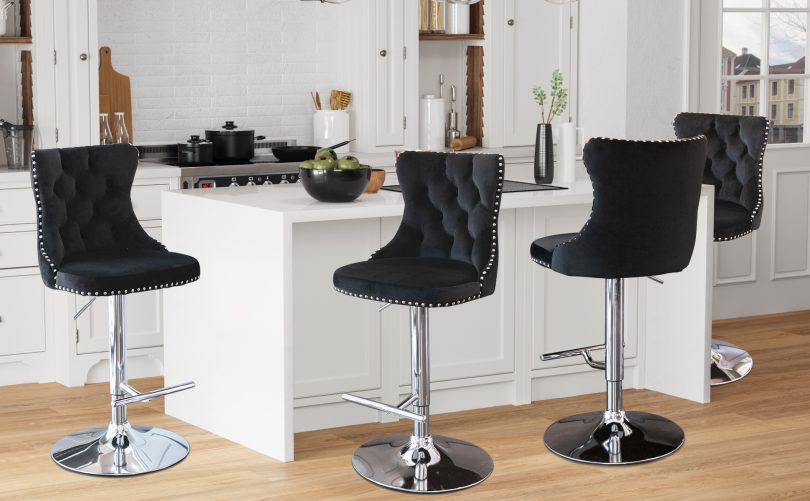

The way people sit at home is changing, and the numbers tell a clear story. In the United States, home renovation spending has remained strong, with annual expenditures exceeding 450 billion dollars in recent years. At the same time, kitchen remodels consistently rank among the top home improvement projects homeowners invest in. As open floor plans continue to dominate new builds and renovations, seating around islands and counters has become more important than ever.
Within this shift, one product category is quietly outperforming expectations. Swivel bar stools are no longer seen as a novelty or a niche design choice. In 2026, they represent a practical response to how families live, work, and entertain at home. The rise of flexible living spaces has created demand for seating that adapts to movement, conversation, and multi use environments. Swivel functionality meets that demand in a way fixed seating simply cannot.
Why Flexibility Is Driving Purchasing Decisions
Consumer behavior in 2026 reflects a broader emphasis on adaptability. Hybrid work remains common across many industries, with millions of Americans working from home at least part time. Kitchens and adjacent living areas now serve as workstations, homework hubs, and social spaces, often within the same day.
This shift has influenced furniture buying patterns in measurable ways:
- Homeowners prioritize multi functional furniture that supports work, dining, and socializing.
- Seating comfort and mobility rank higher in purchasing surveys than purely decorative features.
Swivel bar stools align directly with these priorities. A 360 degree rotation allows users to turn toward a laptop, pivot toward a child asking a question, or join a conversation happening behind them. Instead of dragging a stool across hardwood floors or tile, users simply rotate. That subtle convenience adds up over time, especially in busy households.
Retail data across the broader furniture market shows steady growth in categories tied to flexible living. Adjustable desks, modular sofas, and mobile storage solutions have all seen increased demand. Swivel seating fits naturally into this ecosystem of adaptability.
Design Evolution: From Basic Utility to Statement Piece
A decade ago, swivel bar stools were often associated with casual basement bars or traditional pub aesthetics. In 2026, the design language has changed dramatically. Manufacturers now offer sleek metal frames, minimalist silhouettes, sculpted wood bases, and upholstered seats in performance fabrics.
The global furniture market is projected to surpass $ 800 billion in the next few years, driven in part by consumer interest in style-conscious, durable home upgrades. Swivel bar stools have benefited from this design renaissance. Instead of being an afterthought, they are frequently chosen as focal points in kitchen and bar layouts.
Several design trends stand out:
- Low-profile swivel mechanisms that are hidden within the seat base.
- Mixed-material combinations, such as powder-coated steel with wood accents.
- Upholstered backs that enhance comfort while maintaining a clean visual line.
This evolution has made swivel bar stools attractive to a broader demographic. Younger homeowners appreciate contemporary finishes, while established households value ergonomic support and longevity. As a result, the category is no longer segmented by age or lifestyle. It is mainstream.
The Influence of Entertaining and Social Living
Entertaining at home has regained momentum. Surveys indicate that a majority of homeowners prefer hosting small gatherings in their own space rather than dining out frequently. Rising restaurant prices and a desire for personalized experiences have made home entertaining both economical and appealing.
Swivel bar stools support this social shift in subtle but important ways. Guests can turn to speak with others without having to reposition their seats. In open-concept layouts, the kitchen island often serves as the social anchor. When seating allows for easy movement and interaction, the atmosphere feels more natural.
From a behavioral standpoint, the ability to rotate encourages engagement. Eye contact becomes easier. Conversations flow more freely. These factors may seem minor, but they shape how comfortable guests feel during gatherings. In 2026, consumers are increasingly aware that furniture influences experience, not just aesthetics.
Ergonomics and Comfort as Competitive Differentiators
Another factor behind the rise of swivel bar stools is the growing awareness of ergonomics. The average American adult spends more than 7 hours per day sitting. With this in mind, comfort has become a central purchasing criterion.
Manufacturers have responded by refining seat height options, footrest placement, and back support angles. In well-designed swivel models, the rotation mechanism operates smoothly without wobble, maintaining structural stability even with frequent use.
From a technical perspective, buyers in 2026 are looking for:
- Reinforced frames that support higher weight capacities.
- Smooth bearing systems that allow quiet rotation.
- Upholstery materials resistant to stains and wear.
These performance features align with broader consumer expectations. Durability is no longer negotiable. As inflation has influenced spending habits, homeowners prefer investing in durable items rather than replacing cheaper alternatives every few years. Swivel bar stools that combine movement with structural integrity meet that expectation.
The Impact of Real Estate and Space Optimization
Housing trends also play a role. In many metropolitan areas, square footage comes at a premium. Smaller homes and apartments require smarter space planning. Fixed furniture can limit layout flexibility, especially in compact kitchens.
Swivel bar stools help maximize usable space. Because they do not require extra clearance for pulling out and pushing in repeatedly, they can be positioned efficiently along counters and islands. The ability to rotate in place reduces the need for wide circulation zones.
At the same time, suburban homeowners with larger kitchens are using swivel seating to create layered seating zones. A kitchen island might serve as a breakfast bar in the morning and a casual cocktail area in the evening. The same stools accommodate both scenarios without adjustment.
This dual appeal, supporting both compact and spacious environments, has strengthened the product category’s relevance across income brackets and housing types.
Retail Strategy and Digital Influence
The way consumers discover furniture has evolved significantly. Online furniture sales are growing, with digital platforms influencing purchasing decisions more than traditional showroom visits. Detailed product videos, 3D renderings, and customer reviews help buyers evaluate swivel mechanisms and comfort features before making a purchase.
Social media has also amplified visibility. Design influencers frequently showcase kitchen transformations where swivel bar stools play a central role. These visuals reinforce the idea that swivel seating is both practical and aspirational.
Retailers are adapting by offering broader customization options, including fabric choices, frame finishes, and seat heights. In a competitive environment, the ability to tailor a stool to specific design preferences has become a key selling point.
Looking Ahead: Movement as the New Standard
The rise of swivel bar stools in 2026 reflects a broader cultural preference for flexibility, comfort, and experience driven design. Consumers are no longer selecting furniture based solely on appearance. They are evaluating how each piece performs throughout the day.
As hybrid lifestyles continue, movement will likely remain a core expectation. Seating that adapts to shifting activities will outperform rigid alternatives. In that context, swivel functionality is not a passing trend. It is a logical response to how modern households operate.
When design innovation, ergonomic awareness, and social behavior align, product categories evolve. Swivel bar stools have reached that point. They are no longer optional upgrades. For many consumers in 2026, they are the standard for kitchen and bar seating, combining motion, style, and durability in a way that reflects the rhythm of contemporary life.