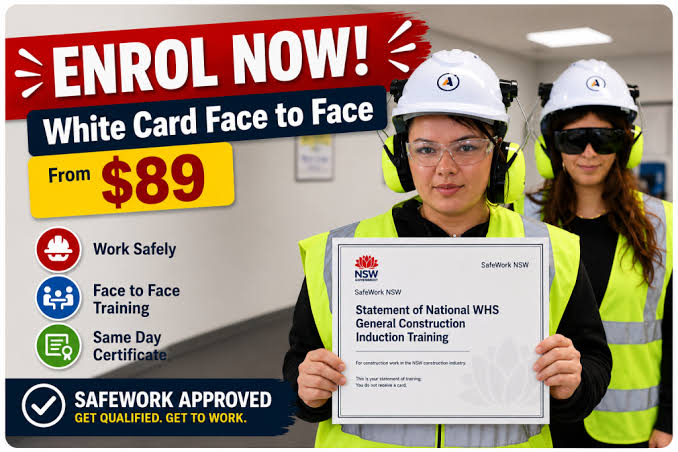

Entering the construction industry offers exciting opportunities for individuals interested in developing practical skills and building rewarding careers. From carpentry and plumbing to electrical work and bricklaying, apprenticeships provide valuable opportunities to learn from experienced professionals. However, working on construction sites requires more than technical knowledge and physical ability. Understanding workplace safety, recognising potential hazards, and following established procedures are essential responsibilities for every aspiring tradesperson.
Establishing a Strong Foundation for a Construction Career
Apprentices often enter the construction industry with limited experience in professional working environments. Completing an NSW white card course helps individuals develop fundamental safety knowledge before undertaking construction activities. The training introduces participants to workplace health and safety responsibilities, common construction hazards, and appropriate methods for managing risks.
A White Card is generally required for individuals carrying out construction work in Australia. Obtaining this qualification demonstrates that an individual has completed general construction induction training. For apprentices, it represents an important step toward entering their chosen trade and developing professional competence under appropriate supervision.
Recognising Hazards Before They Become Problems
Construction sites contain numerous potential hazards that inexperienced workers may struggle to identify. Moving machinery, electrical equipment, falling objects, uneven surfaces, and hazardous substances can create challenging working conditions. Learning to recognise these risks early allows apprentices to make more informed decisions throughout their working day.
Safety training encourages participants to observe their surroundings carefully and understand the consequences of unsafe behaviour. Rather than simply reacting to dangerous situations, aspiring tradespeople learn to identify warning signs and report concerns before incidents occur. This proactive approach supports safer working environments and encourages responsible decision-making.
Developing Confidence Through Practical Safety Knowledge
Starting an apprenticeship can feel overwhelming, particularly when entering an unfamiliar construction environment. Enrolling in a white card course Sydney can help aspiring tradespeople become more comfortable with essential safety procedures, workplace terminology, and construction industry expectations.
Participants learn about personal protective equipment, safety signage, emergency procedures, and hazard reporting. Understanding these concepts allows apprentices to communicate more effectively with supervisors and experienced colleagues. Greater familiarity with workplace safety requirements can also reduce uncertainty when undertaking new responsibilities or working around unfamiliar equipment.
Learning the Value of Workplace Communication
Preventing construction accidents is largely dependent on effective communication. Apprentices must understand instructions, ask questions when uncertain, and communicate potential hazards to relevant personnel. Misunderstandings can lead to serious consequences, particularly when multiple trades operate within the same construction area.
White Card training introduces learners to the importance of reporting incidents, following safety instructions, and participating in workplace safety discussions. Developing these communication habits early helps apprentices become more dependable team members while contributing to a cooperative working environment where safety concerns are taken seriously.
Accessing Training Within Sydney’s Central Business District
Convenient training locations can make professional development more accessible for students, job seekers, and individuals preparing to begin apprenticeships. Those searching for white card Sydney CBD training options may benefit from choosing a location that accommodates their travel requirements and existing commitments.
Central training locations can be particularly convenient for individuals relying on public transportation. Before enrolling, participants should confirm that the training provider is appropriately registered and meets applicable NSW construction induction training requirements. Checking identification requirements, course schedules, and assessment arrangements can also help learners prepare for their training experience.
Building Professional Habits From the Beginning
Successful tradespeople develop habits that extend beyond their technical abilities. Arriving prepared, maintaining organised workspaces, inspecting equipment, respecting safety boundaries, and following established procedures contribute to professional reliability.
Construction induction training helps apprentices understand why these responsibilities matter. Establishing positive habits early can influence how individuals approach their work throughout their careers. Employers also benefit from workers who demonstrate accountability, respect workplace procedures, and actively contribute to maintaining safe conditions.
Preparing for Long-Term Industry Opportunities
Sydney’s construction industry offers opportunities across residential developments, commercial buildings, infrastructure projects, and property maintenance. While a White Card does not replace trade qualifications or specialised training, it provides essential general safety knowledge that supports entry into construction environments.
As apprentices gain experience, they can pursue additional qualifications and develop specialised skills relevant to their chosen professions. Continuing safety education remains important as responsibilities increase and workers encounter more complex equipment, materials, and working conditions.
Conclusion
White Card training provides apprentices and aspiring tradespeople with an essential introduction to construction workplace safety. By developing hazard awareness, communication skills, and responsible working habits, participants can approach their future careers with greater confidence. Investing in appropriate safety education before entering the industry supports personal development, professional readiness, and safer construction environments across Sydney.
<iframe src=”https://www.google.com/maps/embed?pb=!1m14!1m8!1m3!1d6625.098093841099!2d151.2079239!3d-33.8755109!3m2!1i1024!2i768!4f13.1!3m3!1m2!1s0x6b12afa1f35c3731%3A0x76f72ba3c406c1be!2sFirst%20Aid%20Pro!5e0!3m2!1sen!2sau!4v1790558960628!5m2!1sen!2sau” width=”600″ height=”450″ style=”border:0;” allowfullscreen=”” loading=”lazy” referrerpolicy=”strict-origin-when-cross-origin”></iframe>