
Selecting the right school for a child is one of the most consequential decisions a family makes. For internationally mobile families, expatriates, and globally oriented Thai households, that decision is further complicated by the need to find an academic environment that prepares children for university admission abroad, fosters multilingual fluency, and provides continuity across different countries. Bangkok, as one of Southeast Asia’s most dynamic cities, has developed a robust ecosystem of international schools — each with distinct philosophies, fee structures, and academic frameworks. Understanding the landscape before committing is essential.
Why Bangkok Has Become a Hub for International Schooling
Over the past two decades, Bangkok has seen substantial growth in its international school sector. Demand is driven by three overlapping groups: expatriate employees relocated by multinational corporations, Thai families who want their children educated in English-medium environments, and families from neighboring countries seeking stable educational infrastructure in a cosmopolitan setting.
The city now hosts schools affiliated with British, American, Australian, Canadian, and International Baccalaureate curricula. This diversity gives families meaningful choice but also creates complexity. Each framework carries different implications for university admissions, grading conventions, and pedagogical approach.
Understanding the International Baccalaureate Framework
Among the curricula available in Bangkok, the IB is frequently discussed by education consultants and university admissions offices alike. International baccalaureate education operates across four programmes: the Primary Years Programme (PYP), Middle Years Programme (MYP), Diploma Programme (DP), and Career-related Programme (CP). Together, they create a continuous educational pathway from early childhood through pre-university study.
The IB Diploma, awarded at the end of secondary school, is recognized by thousands of universities worldwide, including leading institutions in the United States, United Kingdom, Europe, and Asia. Its emphasis on critical thinking, interdisciplinary learning, and the Theory of Knowledge component makes it particularly suited for students who may apply to universities across multiple countries.
Key characteristics of IB education include:
- Inquiry-based learning rather than rote memorization
- A required community service and extended essay component
- Assessment that combines internal coursework with standardized external examinations
- A globally portable credential recognized across more than 150 countries
Early Years: Why the Choice of Nursery Matters
Educational research consistently shows that early childhood experiences shape cognitive and social development in ways that persist throughout a child’s academic life. For families planning to enroll their children in an international school long-term, the choice of nursery is not incidental — it is the foundation of the entire educational journey.
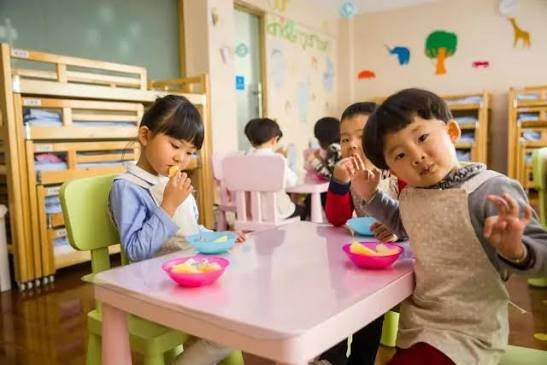
Families seeking an international nursery in bangkok typically look for environments that provide structured language exposure (usually English alongside the home language), play-based learning aligned with recognized early childhood frameworks, and smooth transition pathways into primary programmes. Nurseries that feed directly into established international schools reduce disruption and allow children to build relationships with peers they will continue learning alongside for years.
When evaluating nursery options, parents should ask:
- What curriculum or early childhood framework is used (Reggio Emilia, Montessori, IB PYP, EYFS)?
- What languages are spoken in the classroom environment?
- What is the teacher-to-student ratio?
- How does the nursery support children whose first language is not English?
- Is there a guaranteed pathway into the associated primary school?
Evaluating an International School in Bangkok: Key Criteria
For families beginning the school search process, the sheer number of options can be overwhelming. Narrowing down the choice requires clarity on a few core dimensions.
Accreditation and curriculum alignment: Schools affiliated with recognized bodies — IBO, CIS (Council of International Schools), WASC, or NEASC — have met externally audited standards for teaching quality, facilities, and student support. Curriculum alignment matters particularly for families who move frequently, as some frameworks (notably IB) transfer more smoothly across borders than others.
University outcomes: Established international school in bangkok communities often publish data on where graduates enroll. Reviewing this information gives a realistic picture of whether the school’s academic preparation matches a family’s university aspirations.
Community composition: Schools vary significantly in the ratio of Thai to expatriate students, the nationalities represented, and the degree to which Thai language and culture are integrated into the curriculum. Families intending to remain in Thailand long-term may prioritize schools that maintain strong Thai language instruction alongside the international framework.
Support services: Boarding facilities, learning support for students with different educational needs, counseling services, and extracurricular breadth all contribute to a holistic educational environment. For boarding families in particular, the pastoral care structure deserves careful scrutiny.
Fee structure and additional costs: Tuition fees at Bangkok’s international schools range widely. Families should account not only for annual tuition but also for enrollment fees, materials fees, uniforms, and extracurricular activity costs. Some schools offer sibling discounts or scholarship programmes that can meaningfully reduce the overall financial commitment.
The Role of School Visits and Trial Days
No amount of research replaces a direct school visit. Most international schools in Bangkok offer open days, campus tours, and in some cases trial enrollment periods. During a visit, families can assess the physical environment, observe classroom dynamics, and speak directly with teachers and administrators. Children, particularly at the nursery and primary level, often give clear signals about whether an environment feels welcoming.
Questions worth asking during a school visit include:
- How are new students supported in their transition, especially those joining mid-year or from a different curriculum?
- What professional development do teachers undergo?
- How does the school communicate with parents about academic progress?
- What student support systems exist for academic and emotional wellbeing?
Transitions Between Schools and Countries
For internationally mobile families, managing school transitions is a recurring challenge. Children who move between countries mid-education face disruption in social relationships, curriculum continuity, and sometimes language of instruction. Schools that operate within globally recognized frameworks — particularly the IB continuum — reduce this friction by offering consistent pedagogical approaches regardless of geography.
Families should also consider how a school’s academic calendar aligns with potential future relocations, and whether the school has experience supporting students through international transitions. Guidance counselors who are familiar with university admissions processes across multiple countries are a significant asset for families planning higher education abroad.
Conclusion
Choosing a school in Bangkok’s international sector is a multi-dimensional decision that benefits from systematic research, direct campus engagement, and honest reflection on a family’s long-term goals. The city’s international schooling landscape is mature and competitive, offering genuine options across curricula, age ranges, and community compositions. Institutions such as SISB School represent the kind of IB-aligned environment that serves families seeking continuity from early childhood through secondary education. For families ready to begin exploring their options, a useful starting point is https://sisb.ac.th/
Contact US
Address: 498/12 Soi Ramkhamhaeng 39 (Tepleela 1), Wangthonglang, Wangthonglang, Bangkok 10310 Thailand
Phone: +660 2158 9090
Email: info@sisb.ac.th
Website: https://sisb.ac.th/