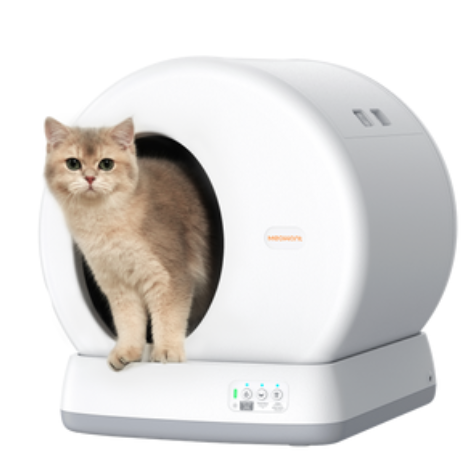

Most conversations about automatic litter boxes focus on the machine: how quietly it runs, how often it cycles, how much time it saves. Far fewer focus on the human half of the equation. In practice, the majority of problems reported by cat owners trace back to setup and habits rather than defective hardware — a box placed in a noisy corner, a sensor left dusty, a cat rushed into a change it never agreed to.
That is good news, because habits are easier to fix than engineering. This article walks through the mistakes that most often undermine a safe self cleaning litter box, explains why each one matters to a living animal, and offers a straightforward correction for every case. None of the fixes require special tools. They require attention during the first week and a short routine afterward.
Mistake One: Trusting the Box Before the Cat Does
The single most common error is switching on automatic cycling the moment the box is unboxed. To a cat, an unfamiliar object that suddenly moves and hums is a reason to stay away. When the only available toilet becomes that object, avoidance turns into accidents elsewhere, and owners often blame the machine when the real issue was the pace of introduction.
A safer sequence is deliberately slow. Set the unit beside the existing box, leave it powered down or in manual mode, and let your cat explore at its own speed. Once visits are routine, run a cycle while you are present so the sound and motion are paired with your calm presence. A safe self cleaning litter box is only as reliable as the trust your cat places in it, and trust is built in days, not minutes.
Keep the old box available throughout. Rushing removal is tempting once the new unit looks established, but a week of parallel use costs little and prevents the setback of a cat that suddenly has nowhere comfortable to go.
Mistake Two: Ignoring the Sensor’s Blind Spots
Sensors are the safety backbone of any automatic unit, and they are also the part most likely to be neglected. Litter dust coats weight plates and infrared windows, gradually weakening the readings that tell the machine whether the box is occupied. A sensor that worked perfectly in week one may hesitate by month three, and hesitation is precisely the behavior you never want in a moving drum.
The fix is unglamorous: follow the manufacturer’s cleaning interval, and treat any change in cycle behavior as a signal to inspect the sensors rather than to press reset and move on. Pay attention to the litter you use as well. Fine, dusty clays settle into every crevice, while heavy pellets can mask a weight sensor’s minimum threshold. If the box supports a range of litter types, choose one that suits both your cat and the sensor design.
Weight limits deserve the same scrutiny. A cat below the minimum may not register at all, and a cat near the maximum may trigger inconsistent readings. Check where your cat sits on the published range, and if it is close to either edge, test the unit manually before trusting it to cycle unattended.
There is a third kind of blind spot: behavior. A cat that stands on the rim rather than inside, or that rests a paw on the entry lip, may confuse a sensor that was designed around a cat fully inside the box. Watch your cat’s actual posture during the first week instead of assuming it uses the machine the way the manual imagines.
Mistake Three: Buying for the Discount Instead of the Cat
Price is a fair consideration, but it becomes a mistake when it overrides fit. Entry height, interior volume, and opening style determine whether a cat can use the box comfortably, and no discount compensates for a machine that is too small or too steep for its occupant. Senior cats in particular struggle with high walls, while large breeds can find compact drums genuinely cramped.
Reviews are worth reading, but read them for the complaints rather than the praise. Repeated mentions of a box that stops registering a cat, cycles unexpectedly, or needs constant resets point to sensor design that has not been refined. A single negative review is noise; the same problem described by several buyers is a pattern, and a pattern is what you will likely experience too.
Before buying, measure your cat from nose to tail base while it stretches, and compare that to the interior dimensions rather than the exterior footprint. Then think about how your cat enters and exits: does it step daintily or leap? A model that suits one style can feel precarious to the other. If you live with more than one cat, the least confident one should set the standard, since a box that works for the boldest cat may still be avoided by the shy one.
- Confirm the unit supports your cat’s adult weight, not just its current size.
- Check that the entry height suits the oldest or least mobile cat in the home.
- Look for smooth interior surfaces that are easy to wipe and free of sharp seams.
Mistake Four: Skipping Maintenance Until Something Smells
Automatic does not mean self-sufficient. The machine handles scooping, but waste still accumulates in the receptacle, and odor control depends on timely emptying. Owners who wait for a smell are usually already past the point where the box is pleasant for the cat, and cats are far less forgiving of odor than humans are.
Set a schedule that matches your household rather than the product’s optimistic marketing. Empty the waste drawer before it is full, wipe the interior on a regular cadence, and deep clean the removable parts as the manual directs. Watch for error codes and address them the same day; a machine stuck mid-cycle is not protecting anyone. Meowant publishes maintenance guidance alongside its unit documentation, which makes it easier to build a realistic routine instead of guessing.
Deep clean the parts a wipe cannot reach. Clumps lodge under the rake or behind the drum, and old litter hardens into surfaces until the mechanism strains against it. A monthly disassembly, if the manual permits it, is usually enough to catch the buildup before it affects motion. Reassemble carefully and test a full cycle before your cat returns to the box.
Placement belongs in this section too. A box beside a washing machine or in a high-traffic hallway invites stress, and stress leads to avoidance. Choose a quiet spot with a clear escape route, away from food and water, and keep the surrounding floor clear so a startled cat never feels trapped.
A Short Routine That Prevents Most Problems
Once the basics are in place, a weekly check keeps small issues from becoming safety concerns. Spend a few minutes on the sensors, confirm the waste level, and watch one full cycle with your cat nearby. Notice whether the cat approaches the box willingly and leaves calmly; both are better indicators of wellbeing than any status light.
Keep a simple log for the first month if you can. Recording cycle errors, cleaning dates, and any change in your cat’s bathroom habits makes patterns visible early. If your cat begins hesitating at the entrance or eliminating elsewhere, pause automatic mode and investigate rather than assuming the behavior will settle on its own.
Share the routine with everyone in the home. A machine maintained by one person and ignored by three others is eventually maintained by nobody, and the consequences land on the least assertive cat in the household. A short note by the box — empty by this day, wipe interior weekly, check sensors after cleaning — keeps the standard steady without nagging.
Better Habits Make Better Machines
Almost every risk discussed here shrinks with attention rather than expense. Introduce slowly, keep sensors clean, buy for the cat’s body instead of the sale tag, and maintain the unit on a schedule you can actually keep. These are modest habits, but they are what separates a helpful appliance from a source of stress.
An automatic box is a tool, and tools work best when the person using them stays involved. Give your cat time, give the machine regular care, and watch for the small signals that something has changed. Do that, and the convenience you paid for arrives without the risks that careless setup so often creates.