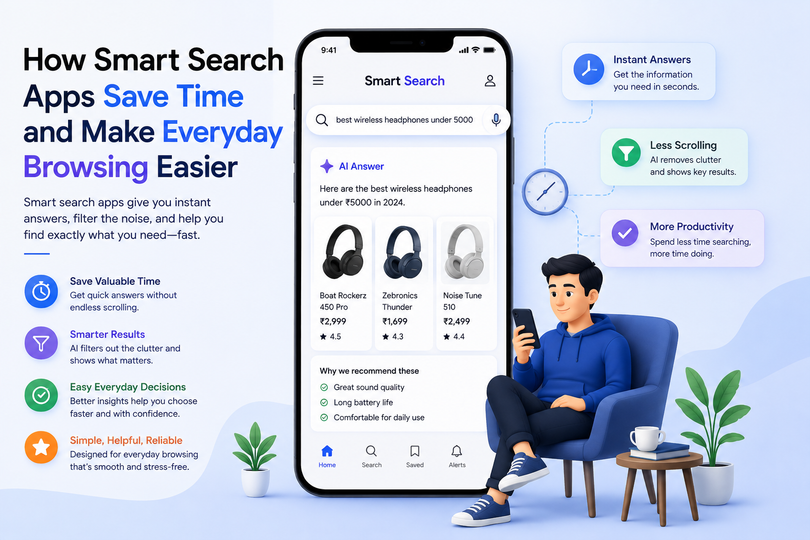

The way people search for information online is changing. Traditional search engines can be useful, but finding a simple answer often means scrolling through multiple results, opening several websites, comparing information, and deciding which source is most useful.
A smart search app can make this process easier by understanding questions in natural language and providing information in a more direct and useful format. Instead of making users do all the research themselves, smart search tools are designed to reduce unnecessary steps and help people reach an answer faster.
For everyday activities such as shopping, planning trips, choosing recipes, comparing options, or finding quick information, this can make browsing feel simpler and less time consuming.
For people looking for a simpler approach to everyday search and decision making, smart search app Qoob offers a search experience built around short, clear answers and practical decisions.
What Is a Smart Search App?
A smart search app is a search tool designed to understand what a person is actually asking rather than simply matching keywords. It can interpret natural questions and provide relevant information in a concise format.
Traditional search often provides a page of links. Users then need to visit different websites and gather the information they need. Smart search aims to reduce this effort by organizing useful information around the question.
Modern AI search experiences are increasingly focused on natural language questions, follow up searches, and direct answers.
How Smart Search Works
A smart search experience generally focuses on understanding the intent behind a query and presenting information in a way that is easier to use.
For example, instead of searching for several individual keywords about a weekend activity, a user can ask a complete question such as, “What are some affordable things I can do this weekend?”
The goal is to make search more conversational, practical, and focused on the user’s needs.
Why Traditional Browsing Can Take So Much Time
Searching for information is not always difficult, but it can involve many small steps. A person may enter a query, scan results, open several pages, ignore advertisements, compare information, and return to the search results before finding something useful.
This process becomes particularly frustrating when the question is simple.
For example, someone looking for a recipe may not need to read several long articles. Someone comparing two products may simply want the most important differences. Someone planning a trip may want a concise overview instead of opening dozens of travel pages.
Smart search is designed to reduce this unnecessary browsing.
Less Time Searching Through Results
One of the biggest advantages of smart search is reducing the amount of time spent going through search results.
Instead of presenting only a long collection of links, an intelligent search tool can focus on the information that is most relevant to the question.
This does not mean traditional search has become useless. Search engines remain valuable when users need original sources, detailed research, specific websites, or extensive information. However, for everyday questions, a direct answer can often be more convenient.
Smart Search Makes Everyday Questions Easier
Many online searches are connected to small decisions we make throughout the day. These questions may include what to cook, what to buy, where to go, or how to solve a simple problem.
A smart search app can help organize these questions into useful answers without requiring users to become experts at writing search queries.
Qoob, for example, describes its product as a search and decision tool focused on short, clear answers for everyday decisions.
Ask Questions in Natural Language
Users do not always know which keywords will produce the best results. Smart search allows people to phrase questions naturally.
You can ask a question as you would ask another person and receive an answer designed around the meaning of the query.
This makes searching more accessible, particularly for people who do not want to spend time experimenting with different keywords.
Get to the Important Information Faster
Another advantage is information prioritization. When a user has a straightforward question, reading multiple pages can create unnecessary information overload.
A concise answer can help users identify the main points quickly. This is particularly useful when the goal is not extensive research but simply making a practical decision.
Smart Search Can Make Shopping Simpler
Online shopping often involves comparing products, features, prices, reviews, and specifications. A basic search may produce dozens or hundreds of results, leaving the user to do the comparison manually.
A smart search app can help users organize their questions around what actually matters to them.
For example, instead of searching separately for different product features, a user might ask which option is more suitable for a particular requirement. This approach can make the research process more focused.
AI powered search is increasingly being used to help shoppers discover and compare products with less effort.
Useful for Quick Comparisons
Smart search can be especially helpful when comparing two or more choices.
Users can ask about differences, advantages, disadvantages, or which option may better suit a specific need. This can reduce the amount of manual research required.
However, for expensive or important purchases, users should still check original product information and reliable sources before making a final decision.
It Can Simplify Travel and Weekend Planning
Travel planning is another area where search can quickly become overwhelming.
A simple trip can involve searching for destinations, accommodation, activities, restaurants, transportation, and schedules. Opening many websites can make the planning process feel like a project of its own.
A smart search app can help users start with a clear question and narrow their options more quickly.
From Ideas to Practical Choices
Instead of browsing endlessly for inspiration, users can ask specific questions based on their preferences, budget, time, or interests.
For example:
- Find ideas for a two day weekend trip.
- Suggest activities for a family with children.
- Compare two destinations for a short vacation.
The more clearly the question describes the user’s needs, the more useful the resulting information can be.
Smart Search Reduces Information Overload
The internet contains an enormous amount of information. More information does not always mean a better browsing experience.
When search results contain too many links, advertisements, opinions, and repeated information, users can spend more time deciding what to read than actually solving their problem.
A smart search experience can help reduce this clutter by focusing attention on relevant information.
Qoob positions its search experience around short answers rather than long lists of links and describes its goal as helping users make everyday decisions with less clutter.
A Cleaner Browsing Experience
A cleaner search experience can make it easier to focus.
When users receive a concise response, they can quickly understand the main idea and decide whether they need additional research. This creates a more efficient workflow for simple questions.
It also helps prevent the common habit of opening multiple tabs and forgetting which page contained the useful information.
Personalization Can Make Search More Relevant
Another important development in smart search is personalization. People have different priorities, preferences, budgets, and circumstances.
A useful search experience should therefore move beyond generic information and consider the context of the question.
Personal AI search is designed around this idea. Instead of treating every query as completely separate, it can focus on what the user means and what information is relevant to their situation. Qoob describes its approach as giving answers shaped around what matters to the individual.
Better Answers for Real Decisions
Personalized search can be especially useful when there is no single answer that works for everyone.
For example, the best restaurant, travel destination, laptop, recipe, or weekend activity depends on individual circumstances.
A search tool that understands those preferences can make the browsing process more practical.
Smart Search Is Useful for Quick Research
Not every research task requires a detailed academic investigation. Sometimes users simply need to understand a topic before moving forward.
A smart search app can help with quick research by providing a starting point, summarizing relevant information, and helping users identify the next question they should ask.
This can be useful for students, professionals, families, shoppers, travelers, and anyone who regularly searches for practical information online.
How to Get Better Results From Smart Search
The quality of a search experience also depends on the question being asked. Users can improve their results by explaining what they need rather than using only a few generic keywords.
For example, instead of searching for “laptop,” a more useful question could be, “Which type of laptop is suitable for remote work, video calls, and everyday browsing?”
Adding context helps a smart search system understand the purpose behind the question.
Keep Questions Clear and Specific
Useful habits include:
- Mention your goal.
- Add important preferences or limitations.
- Ask for comparisons when you are choosing between options.
These small details can help produce information that is more relevant to the actual decision.
The Future of Everyday Browsing
Search is moving toward experiences that are more conversational, personalized, and focused on solving problems. Recent developments in AI search show how search tools are increasingly designed to understand natural language, provide summaries, and support follow up questions.
The purpose is not necessarily to replace every traditional search method. Instead, smart search can provide another way to find information when users want a quick, practical answer.
For everyday browsing, this can mean fewer unnecessary searches, less time spent opening websites, and a clearer path from question to decision.
Conclusion
A smart search app can make everyday browsing easier by reducing repetitive searching, organizing useful information, and helping users focus on what matters. Whether someone is comparing products, planning a trip, choosing a recipe, researching a topic, or making a simple daily decision, a more intelligent search experience can save time and reduce information overload.
The biggest benefit is convenience. Instead of spending unnecessary time sorting through information, users can ask questions naturally and get closer to a useful answer with fewer steps.
Qoob is a human centered smart search app designed to help people find clear answers and make everyday decisions with greater confidence.