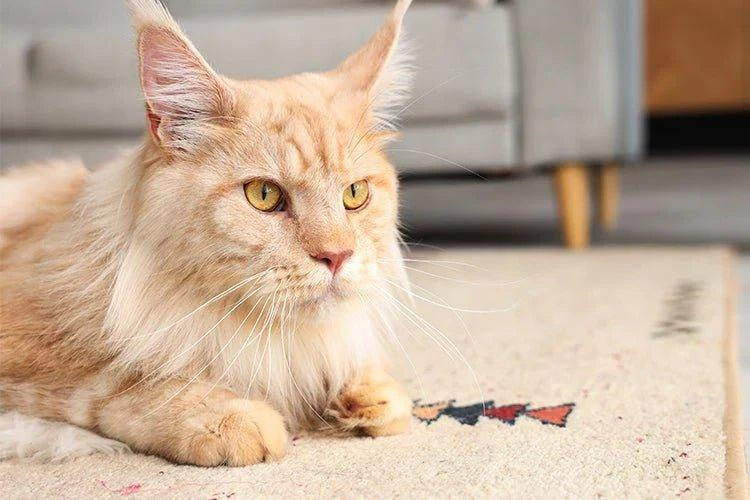
A Maine Coon is a big animal with specific needs, and an automatic litter box is a piece of machinery with fixed dimensions. Bringing the two together can work beautifully — or it can produce a box that is too cramped to turn around in, a cycle that startles a cautious cat, and a machine that sits unused while the floor pays the price.
The decision is less about automation itself and more about whether a given unit fits a given cat. This article compares the two approaches side by side for large-breed owners, explains which measurements and weight limits decide the outcome, covers the noise and maintenance questions that come up with machines, and ends with a practical trial plan you can follow before committing.
What a Maine Coon Actually Needs
Start with physical reality. A good maine coon litter box has to suit a cat that is notably longer than an average one, and its weight can sit well above what many compact units were designed to support. A box that works for a typical cat may force a Maine Coon to stand with its rear over the edge, which means litter on the floor and a cat that never quite relaxes while using it.
Interior length is the measurement that matters most, followed by entry height and headroom. A large cat needs room to turn without brushing the walls, and it needs to enter without stepping over a threshold that feels like a hurdle. For older Maine Coons, a low, wide opening is often the difference between steady use and gradual avoidance.
Temperament is the other half. Despite their size, these cats are often gentle and deliberate, and some are genuinely startled by sudden motion or a hum from an appliance. A quiet manual box can be the calmer choice for such a cat, while a bold, curious Maine Coon may take to a well-sized automatic unit within days.
Automatic Units: Where They Fit and Where They Strain
Automation offers real advantages for a large cat. A Maine Coon produces more waste than a small one, so a machine that scoops after every visit keeps the surface consistently clean without demanding several manual passes a day. For busy households, that reliability is worth a great deal.
The strain appears in fit and tolerance. Before considering a model, confirm that its published weight range covers an adult Maine Coon with margin, and that the interior drum or rake leaves enough space for a long body to sit comfortably. A machine that barely accommodates the cat will feel tight no matter how well it cycles, and tightness is the most common reason a large cat refuses a box.
Noise and motion deserve honest scrutiny too. Ask how loud the cycle is, how long it takes, and what happens if your cat steps back in. A machine that pauses when movement is detected is far easier to introduce than one that finishes its rotation regardless. Meowant documents weight thresholds and sensor behavior for its units, which helps large-breed owners compare fit without relying on guesswork.
The physical mechanism matters as much as the electronics. A drum rotates the whole interior, which keeps the litter bed even but can feel disruptive to a cat that prefers a still surface; a rake sweeps the litter without moving the walls, which is gentler but needs a design that parks clear of the bed when idle. Neither approach suits every cat, and a Maine Coon with a cautious temperament often settles faster into a machine that moves less.
Warranty and parts availability round out the comparison. A machine is a long-term purchase, and a brand that stocks replacement components years later is easier to keep safe than one that treats the unit as disposable. Ask how long the motor is covered and whether sensors can be replaced separately, since those are the parts most likely to fail first.
- Verify the supported weight range covers an adult Maine Coon with margin.
- Check interior length against your cat’s full stretch, not the exterior size.
- Confirm the unit stops when motion is detected mid-cycle.
- Look for a manual stop and a clear error display.
Manual Options That Still Work Well
A large high-sided box remains an excellent choice, and it deserves more credit than it usually gets. There are no sensors to clean, no power supply to depend on, and no cycle sound to startle a nervous cat. For a Maine Coon, a generously sized open box with a low entry can be perfectly comfortable, provided it is scooped daily.
The trade-off is labor. A big cat fills a box quickly, so daily scooping is not optional, and full litter changes may need to happen more often than with a smaller animal. Owners who travel or work long hours often find that manual maintenance slips, which is where automation earns its keep for this breed.
A mixed approach works for some households: a large manual box in the main location and an automatic unit elsewhere as a backup. That arrangement hedges against a machine breaking down and gives a cautious cat a familiar alternative while it adjusts.
Noise, Litter, and the Details That Decide
Litter choice interacts with both box types. A high-clumping, unscented litter holds together under a heavy cat’s digging and keeps surfaces cleaner between scoops. Fine, dusty litter settles into automatic sensors and weakens readings, while heavy pellets can disguise weight detection. If you choose automation, match the litter to the machine’s design as well as to your cat.
Noise is easier to judge in person than from a specification. If possible, watch a unit run before buying, or look for a video that includes sound. A cycle that sounds mild to a human can be startling in a quiet room, and a Maine Coon that spooks once may need weeks to return.
Finally, think about the waste path. Large cats produce large clumps, and a small receptacle fills quickly. Check the drawer capacity and how easy it is to empty and reseal. A machine that requires frequent, awkward emptying loses much of the convenience it promises.
Cleaning access is the other practical detail. A unit that must be hauled apart for routine maintenance will be neglected, and neglect shows up first as odor and then as sensor trouble. Look for removable parts that lift out without tools, smooth surfaces with few crevices, and a manual that describes cleaning in clear steps rather than vague assurances.
A Trial Plan Before You Commit
You can test the fit of any box without committing to a permanent change. Place the new unit beside the existing one and leave both available for at least a week. If it is automatic, keep it powered down at first so your cat can explore the interior without motion, then run a single cycle while you stand nearby.
Watch three things: whether your cat enters without hesitation, whether it can turn around inside, and whether it leaves calmly after finishing. Hesitation at the entrance points to entry height, an awkward turn points to interior length, and a quick exit suggests noise or an unstable floor. Each has a specific fix, and none of them is solved by price.
If the trial goes well, enable automatic cycling and supervise the first few days. Keep the manual box as a fallback until your Maine Coon has used the new unit consistently for a week. A gradual handover prevents the setback of removing the familiar option too soon.
Decide in advance what would make you stop. If your cat refuses the unit twice in a row, if it eliminates beside the box, or if the cycle runs while the cat is near, pause and reassess. Having that line drawn beforehand keeps a disappointing purchase from turning into a weeks-long standoff with an animal that has already made its preference clear.
Match the Machine to the Cat
Automation is neither inherently better nor worse for a Maine Coon. It is a good match when the unit is large enough, quiet enough, and built to stop when it should. It is a poor match when size and temperament are treated as afterthoughts and the purchase is driven by the feature list.
Measure your cat, read the weight limits, and run a one-week trial before committing. If the box fits, your Maine Coon will use it without fuss, and the convenience you were promised will finally show up. If it does not, a large manual box is a perfectly respectable answer — the cat was always the point.