A home does not need to be large to feel good. It does not need expensive furniture or perfect finishes either. What it needs is balance. When a space is well planned, it feels calm the moment you walk in. Nothing pulls your attention too sharply. Nothing feels awkwardly placed. You can move easily, sit comfortably, and use the room without adjusting things every few minutes.
Many people think interior design is about looks alone. In reality, it starts much earlier than colour or décor. It begins with how the space is used. When furniture, movement, light, and storage work together, the home begins to feel settled. This sense of comfort does not happen by accident. It comes from following a few basic principles that apply to almost every home, regardless of size or style.
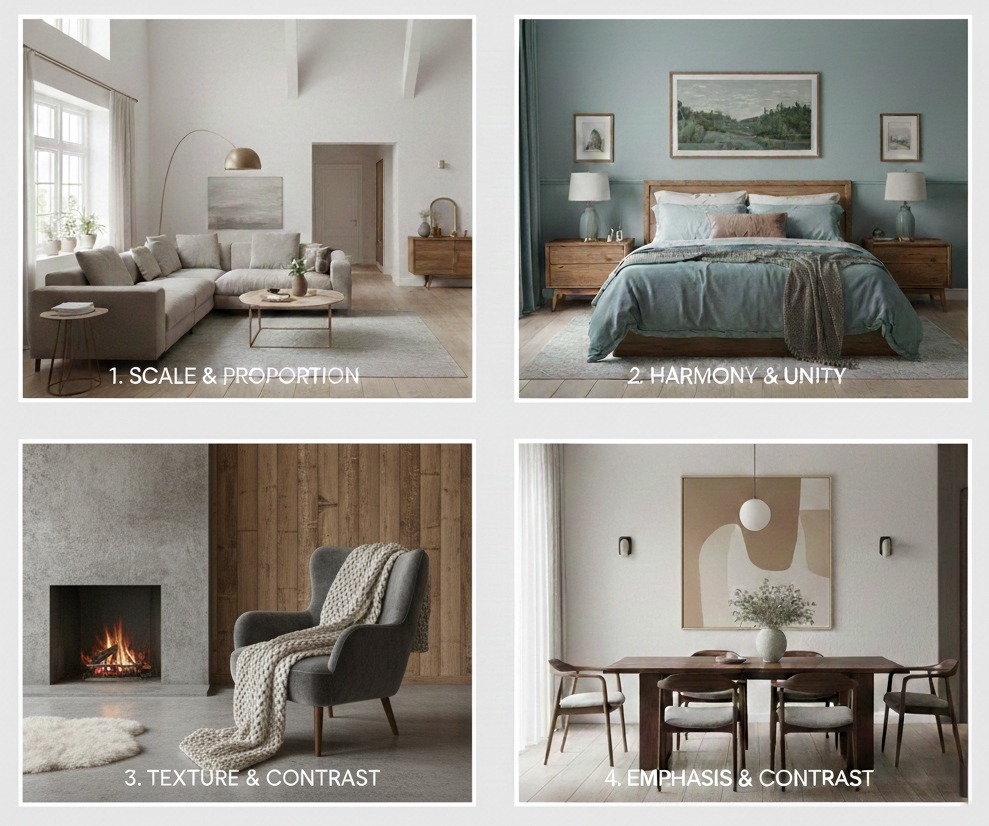
These rules are not strict formulas. They are guidelines that help furniture and décor work together instead of competing with each other. When followed thoughtfully, they allow a space to feel complete without feeling heavy.
Prioritize Functionality Alongside Style
The first rule of any well balanced interior is function. A room can look pleasant, but if it is difficult to use, that discomfort shows over time. Furniture placement should support how people move, sit, sleep, and work within the space.
Sofas and chairs should be arranged so that people can sit and stand without bumping into tables or walls. Walkways should remain clear, especially in shared spaces like living rooms and bedrooms. Beds should allow easy access from both sides whenever possible. Dining tables should leave enough room to pull chairs back comfortably.
When movement feels natural, the room immediately feels more welcoming. This does not mean sacrificing how the room looks. It means letting use guide the layout first, and appearance follow naturally.
Multi purpose furniture helps support this balance. A bed with storage removes the need for extra cabinets. A 3 seater sofa with built-in storage keeps the living room organised while offering comfortable seating for everyday use and guests. Side tables with drawers hold essentials without adding clutter. These choices reduce the number of items in the room, making it easier to maintain order.
Practical layouts often feel more comfortable because they respect daily routines. When furniture supports real life rather than fighting it, the room stays pleasant long after the first setup.
Maintain Balance and Proportion
Balance in a room comes from how furniture relates to the space around it. Oversized furniture in a small room can make the area feel closed in. Very small furniture in a large room can feel lost and disconnected.
Choosing furniture that suits the room’s dimensions is essential. A large sofa needs visual support, such as a rug or side tables, to feel grounded. Smaller seating pieces benefit from being grouped thoughtfully rather than scattered around.
Balance is not only about size. It is also about distribution. If one side of the room feels heavy with furniture and the other feels empty, the space can feel uneven. This can be corrected by adding elements like accent chairs, floor lamps, or side tables to create visual stability.
Symmetry can help in many rooms, especially bedrooms and living rooms. Matching side tables or lamps on either side of a bed create a sense of order. However, perfect symmetry is not required everywhere. Even in more relaxed layouts, proportion keeps things feeling intentional.
Rugs also play a role in balance. A rug that is too small can make furniture feel disconnected. A well sized rug helps anchor seating areas and defines zones within the room.
When balance and proportion are handled carefully, the room feels settled without drawing attention to any single item.
Focus on Color and Texture Harmony
Color sets the tone of a room, but harmony matters more than boldness. A space feels calmer when colours relate to each other rather than compete. This does not mean using only one colour. It means choosing shades that work together naturally.
Walls, furniture, and large surfaces usually form the base. Softer tones often make rooms feel more open, while deeper shades can be used selectively. Cushions, throws, rugs, and curtains allow variation without overwhelming the space.
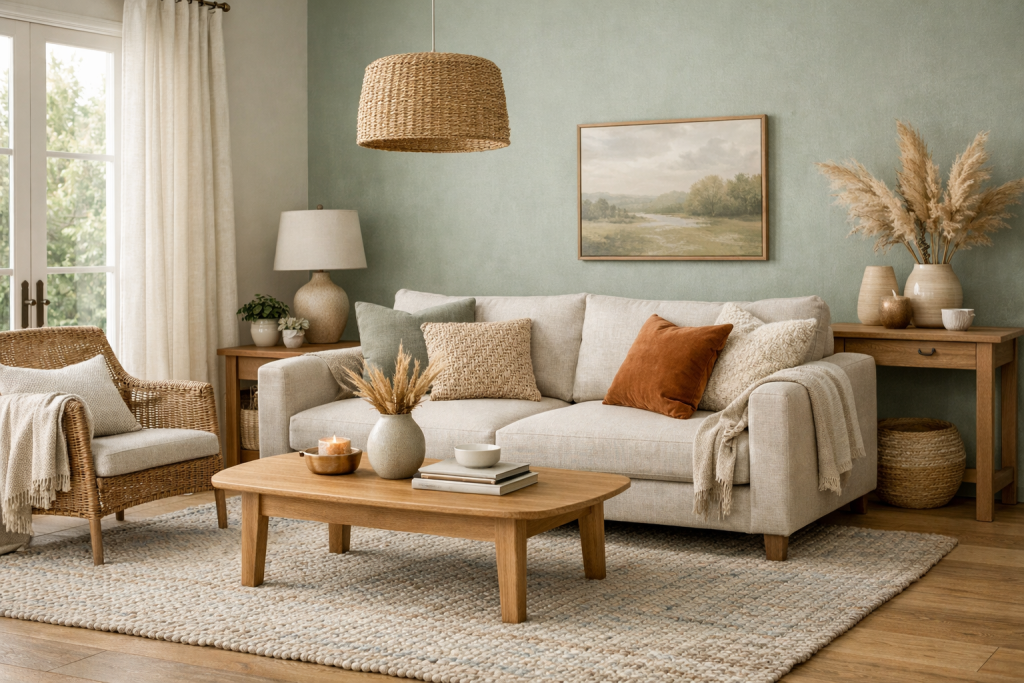
Texture adds interest where colour stays subtle. Fabric, wood, metal, and woven materials bring depth to a room. A sofa may be simple in colour, but cushions in different fabrics add comfort and warmth. A smooth table surface can be balanced with a textured rug beneath.
The key is moderation. Too many textures can make a space feel busy. Too few can make it feel flat. When textures repeat in small ways across the room, everything feels connected.
Harmony comes from repetition and restraint. When colours and textures support each other, the room feels complete without effort.
Layer Lighting for Atmosphere and Function
Lighting often gets less attention than furniture, but it shapes how a room feels throughout the day. A single overhead light rarely supports all activities. Layered lighting creates flexibility and comfort.
Ambient lighting provides overall brightness. Task lighting supports specific activities like reading or working. Accent lighting draws attention to certain areas or objects. Together, they allow the room to adjust to different moods and needs.
Floor lamps work well beside sofas or chairs. Table lamps add warmth when placed on side tables or a centre table, especially in living areas where soft lighting creates a relaxed mood. Pendant lights define dining or seating areas without taking up floor space.
Lighting also supports furniture placement. A chair feels more inviting when paired with a nearby lamp. A shelf or artwork gains presence with focused light. Even darker corners become usable with thoughtful lighting.
Layered lighting adds depth to the room. It prevents flatness and allows the space to change from day to evening naturally.
Create Spaces That Feel Complete and Comfortable
A well balanced interior does not rely on one element alone. Furniture, layout, colour, texture, and lighting all work together. When one is ignored, the room feels unfinished. When all are considered, the space feels settled and comfortable.
Intentional choices matter more than quantity. A few well placed pieces often work better than many loosely arranged ones. Storage integrated into furniture keeps the room organised. Clear movement paths make the space easy to use. Balanced colours and textures keep the room pleasant to spend time in.
Interior design rules are not meant to restrict creativity. They exist to support it. When the basics are handled well, personal touches stand out more clearly.
A well balanced home does not try to impress. It simply works. And when a space works well, it quietly becomes a place people enjoy returning to every day.